


Flexible Scheduling for Laser Hair Removal: How to Book Around Your Week

Quick Summary
Flexible scheduling for laser hair removal means booking sessions around your work, family and travel instead of a clinic's fixed hours. Mobile services bring treatment to your home or office, and planning each area's sessions on one calendar keeps the series on track.
Sessions are typically spaced four to six weeks apart, depending on the area and hair growth cycle.
Plan each treatment area separately, since full legs need longer chair time than the upper lip or chin.
Pair small areas like underarms and bikini in one visit to reduce the number of trips.
Mark trips and events on your calendar first, and leave about a week's buffer around sun exposure.
Ask about moving an appointment before cancelling, and confirm how a change affects the next session.
Can laser fit your busy week?
GLO Mobile Laser brings treatment to your Phoenix home or office on a schedule you set.
Table of Contents
How Flexible Scheduling Works for Laser Hair Removal
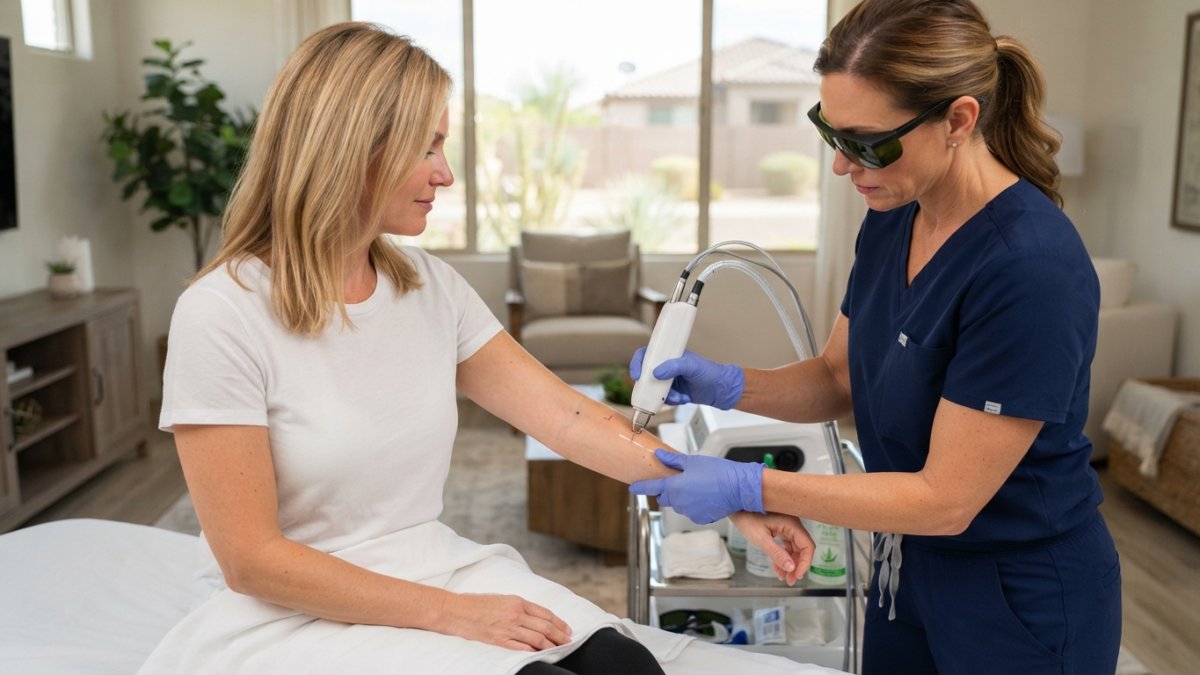
Flexible scheduling for laser hair removal means booking treatment times around your work, family and travel, rather than fitting your life around a clinic's fixed hours. Mobile laser services bring treatment to your home or office, so the appointment itself can move with your week. Most of the flexibility comes from how the appointments are arranged, not from shorter treatments.
Laser hair removal usually requires a series of sessions (Medical laser hair removal: a new rotational approach). Hair grows in cycles, so only follicles in the active growth phase respond to each treatment. A common approach is to space sessions several weeks apart, which is why the calendar matters as much as the treatment itself.
Flexibility has three practical parts: when you can book, how easily you can move a session, and whether the treatment location suits your day. A mobile service addresses the location, while the booking process determines the rest.
Laser Hair Removal Session Intervals and How to Plan Your Calendar
Sessions are typically spaced four to six weeks apart, though the right interval depends on the treatment area and the individual's hair growth cycle. Professional guidance on the bikini area often cites six to eight sessions over this spacing, according to NYC Laser's guidance on bikini laser sessions.
A useful way to plan is to count backward from your key dates. If you have an event in four months, map the sessions onto your calendar first, then book around them. Some people find it helpful to keep sessions on the same weekday each cycle so the schedule becomes predictable.
Intervals are not one-size-fits-all. A provider will confirm the right spacing for your hair and skin, so treat any general timeline as a starting point for conversation.
A Practical Scheduling Calendar by Treatment Area
Different areas usually need different numbers of sessions and different amounts of chair time, so plan each area separately before you combine them. Different areas usually need different numbers of sessions and different amounts of chair time. Full legs and feet take longer to cover because of the surface area, so block more time per visit than you would for a small area like the upper lip or chin.
A workable pattern is to build one calendar with a column per treatment area and a row per session number, then fill in target dates working backward from your goal date. Treat any general spacing as a planning starting point and let your provider set the actual spacing.
Combining areas in one appointment can reduce the number of visits, but confirm that the total session length fits your schedule and the provider's room time. A common pattern is to pair small areas (upper lip plus chin, or underarms plus bikini) in a single visit and keep full legs as its own longer appointment. Write the planned dates into one calendar with a column per area so you can see where two treatments can share a visit and where they need separate days.
Then layer life events on top of the grid before you book. If a vacation, wedding, or work trip falls inside the series, mark it first and shift the surrounding sessions rather than dropping one. Sun exposure matters too: treated skin is typically kept out of direct sun for a period before and after each session, so schedule sessions so the recovery window does not collide with a beach trip or an outdoor event. A practical rule is to leave a buffer of about a week on either side of a sun-heavy trip.
Watch out: stacking too many areas into one visit to save trips can push a single appointment past the time you actually have, which then forces a reschedule and disrupts the interval you were trying to protect.
Different areas need different session counts and chair time, so the table below sets out how they compare when you plan.
Area | Planning note | Scheduling tip |
Full legs and feet | Longer chair time | Book as a separate, longer visit |
Upper lip or chin | Small surface area | Pair with another small area |
Underarms | Small area | Can share a visit with bikini |
Bikini | Often six to eight sessions | Keep on a predictable weekday |
Any area near a trip | Sun exposure matters | Leave about a week's buffer |
What to Do When an Appointment Is Delayed or Rescheduled
Plans change, and a delayed session does not automatically ruin a series, but how you move it matters. The key question is whether the new date keeps you inside the planned interval. If a session moves, ask the provider how the change affects the rest of the series, including whether a missed session should be made up.
When you need to move an appointment, contact the provider as early as possible and give the reason and your preferred replacement windows in the same message. Ask two specific questions: how the change affects the timing of your next session, and whether any fee applies. Review the refund, cancellation and rescheduling policy before you book so you know the terms in advance. Review the cancellation and rescheduling policy on the business's website before booking.
Delays also run the other direction. If the provider needs to move your appointment, confirm the new date in writing and re-check that the following session still lands inside the interval. Keep a simple log of each session date and area so you can see at a glance whether the series is drifting.
Accessibility of booking is part of this. Ask the provider about the availability of evening and weekend slots and how changes can be made. A mobile service adds a location variable, so confirm the address and access details when a session moves. If you are coordinating several areas, reschedule them together where possible so one moved visit does not split a combined appointment into two trips.
Watch out: cancelling outright instead of rescheduling can disrupt your planning, so ask about moving the date first.
Mobile Laser Hair Removal Benefits for Busy Schedules
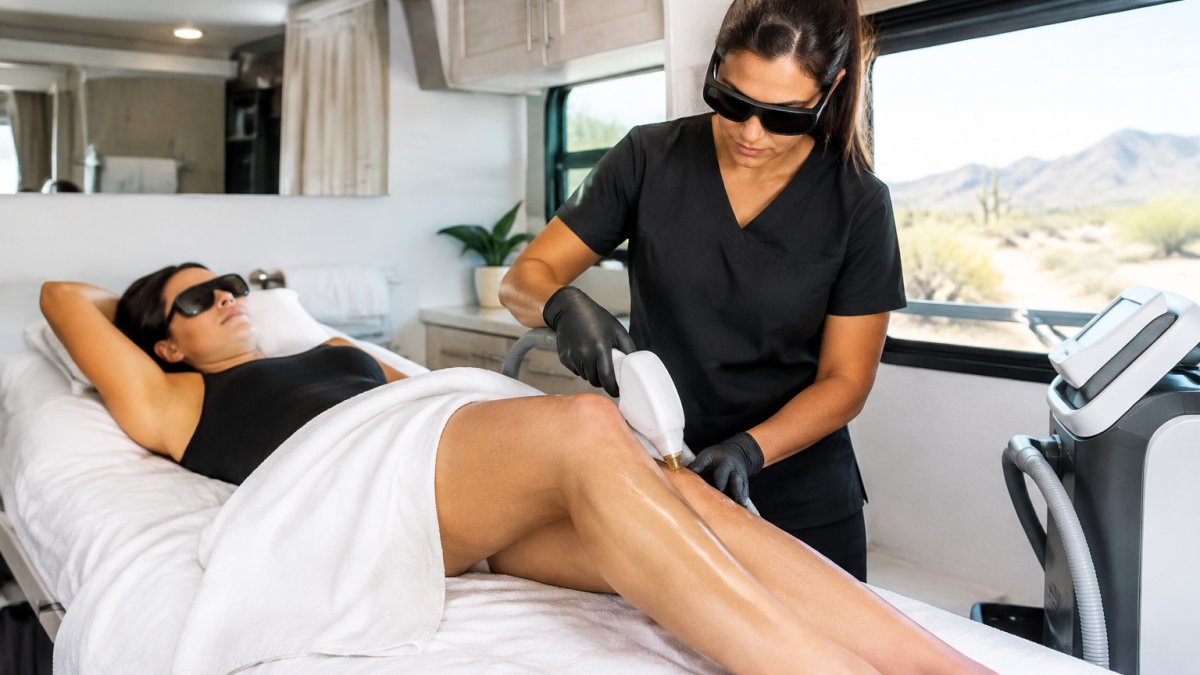
The main benefit of a mobile service is that treatment happens where you already are. Parents, remote workers and people with irregular shifts can avoid travel time entirely, which makes keeping a session interval far easier.

Mobile treatment also helps group bookings. Friends or family members can schedule together at one address, which can make a recurring appointment feel less like an extra errand.
Paying for Sessions: FSA Eligibility and Pay-as-You-Go Options
Whether laser hair removal qualifies for a flexible spending account (FSA) depends on your plan and how the service is classified, so check with your plan administrator before assuming eligibility. Pricing depends on quantity, dates, and delivery, so request a current quote directly from GLO Mobile Laser.
Booking Your First Flexible Appointment With GLO Mobile Laser
To start, pick the treatment area and a rough target date, then request a time through the online booking system. Request a time through the online booking system and choose a slot that fits your week. Once your first session is booked, set your later sessions on the calendar so the series stays on track.
Ready to plan your series around your week? book a Brazilian laser hair removal consultation or request an appointment online with GLO Mobile Laser today.
Frequently Asked Questions
How far apart should laser hair removal sessions be scheduled?
Sessions are commonly spaced several weeks apart, and the number of sessions varies by treatment area. Hair grows in cycles, so sessions timed to catch hair in its active growth phase work best. Intervals can vary with hair type, skin, and treatment area, so your provider's plan should set the exact timing. Ask your technician to confirm the schedule for your specific areas before you book the series.
Can you use an FSA for laser hair removal?
Eligibility for flexible spending accounts depends on whether the treatment is considered medically necessary and on your plan's rules. Cosmetic procedures generally do not qualify, while some treatments tied to a diagnosed medical condition may. Check your plan administrator or the IRS guidance on qualified medical expenses, and ask your provider for an itemized receipt and any documentation your plan might require before you assume reimbursement.
What are the benefits of pay-as-you-go laser hair removal compared with contracts?
Pay-as-you-go pricing lets you book individual sessions without committing to a full package upfront, which suits schedules that change from week to week. Pricing depends on quantity, dates, and delivery, so request a current quote from GLO Mobile Laser for accurate figures.
How does mobile laser hair removal improve scheduling flexibility?
Mobile service brings the treatment to your home or office, which removes travel time and lets you book around work, school pickups, or family commitments. Because the appointment happens where you already are, it is easier to fit sessions into a tight week. Ask the provider about available time slots and how to prepare the area before your appointment.
Comments