


Does Laser Hair Removal Work on Blonde Hair?

Last Updated: November 14, 2026
Quick Summary
Laser hair removal works best on dark hair and is usually less effective on blonde hair, because the laser targets pigment in the hair shaft and blonde hair contains less melanin. Dark blonde hair often holds enough pigment for a partial response, while pale blonde or white-blonde hair usually responds poorly.
Blonde hair contains less melanin, so less heat reaches the follicle during treatment.
Dark blonde hair often holds enough pigment for a partial response.
Pale blonde or white-blonde hair usually responds poorly to laser treatment.
Many at-home device manuals state they are not intended for light blonde, white, gray or red hair.
Electrolysis uses a fine probe inserted into each follicle to deliver a small current.
Is laser an option for your blonde hair?
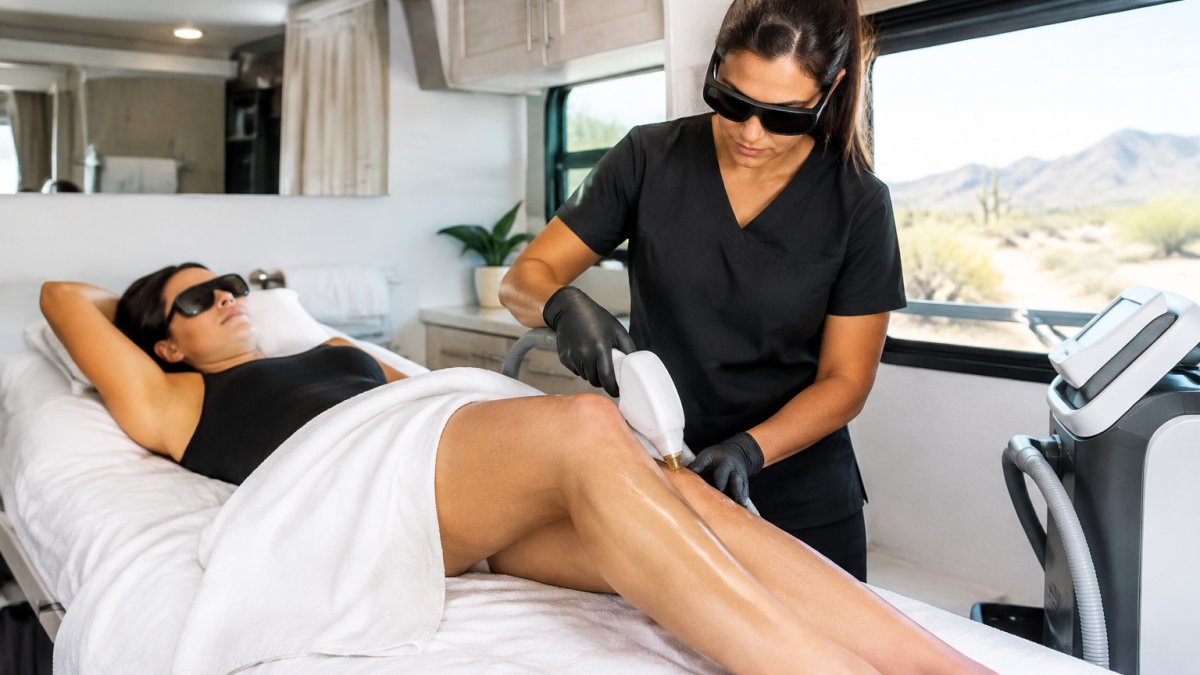
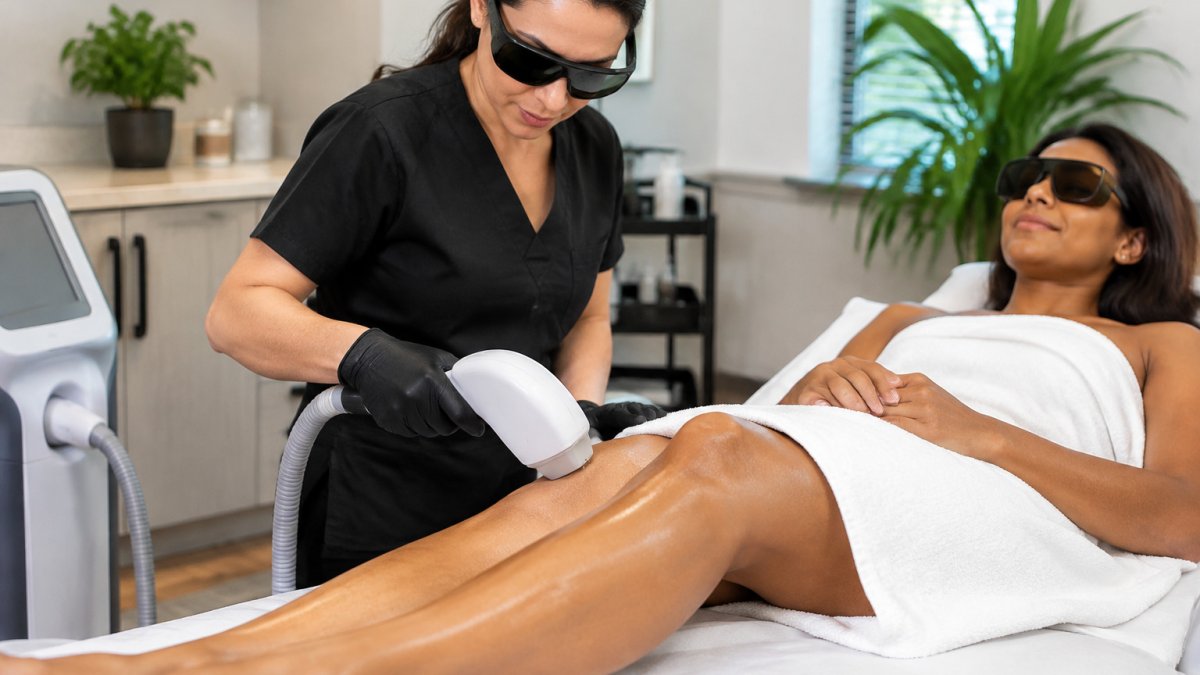
GLO Mobile Laser brings professional laser treatments to your home or office across the Phoenix metro area.
Table of Contents
How Laser Hair Removal Targets Hair Color
Laser hair removal works best on dark hair and is usually less effective on blonde hair, because the laser targets pigment in the hair shaft. Blonde hair contains less melanin, so less heat reaches the follicle. The treatment relies on selective photothermolysis: laser energy is absorbed by melanin in the hair, turns into heat, and damages the follicle enough to slow future growth. According to the StatPearls clinical reference on Fitzpatrick skin types, blond or red hair is listed among the features of Fitzpatrick skin type I, where pigment contrast is lowest.

Mayo Clinic notes that blonde hair has less pigment, which makes treatment less effective, in its overview of laser hair removal. A consultation can help clarify suitability before booking a full course. For comparison, readers can review results for dark hair or check whether laser treatment is safe for tan skin.
Laser Hair Removal for Blonde Facial Hair and Dark Blonde Hair
Blonde facial hair is one of the hardest areas to treat: dark blonde hair often holds enough pigment for a partial response, while pale blonde or white-blonde hair usually responds poorly. A 2025 article indexed in PubMed Central describes a rotational approach in which treatment made hair finer and blonder, followed by use of an Alexandrite laser (rotational approach to medical laser hair removal); treat it as a sign that some practitioners are testing combined methods, not as proof of a reliable result. Body area changes the answer: fine, hormone-driven facial hair often needs more sessions at lower settings, while coarse dark blonde hair on legs or underarms can respond better than soft upper-lip hair. Hair grows in cycles and the laser only affects follicles in an active growth phase, so sessions spaced weeks apart are standard. For the face, the chin and lip treatment page explains what that service involves. Dyeing blonde hair darker before a session is not a reliable workaround, so ask a qualified professional about your options.
Blonde hair comes in shades, and the shade changes how well a laser can work.
Hair type | Likely response | Note |
Dark blonde hair | Often holds enough pigment for a partial response | Coarse dark blonde on legs or underarms can respond better |
Pale blonde or white-blonde hair | Usually responds poorly | Hardest areas to treat include blonde facial hair |
Fine, hormone-driven facial hair | Needs more sessions at lower settings | Soft upper-lip hair responds worse than coarse hair |
Light blonde, white, gray or red hair | Many at-home manuals say devices are not intended for it | At-home laser devices are generally a poor fit |
At-Home Laser Hair Removal for Blonde Hair and Electrolysis Hair Removal
At-home laser devices are generally a poor fit for blonde hair, and many manuals state they are not intended for light blonde, white, gray or red hair. Electrolysis uses a fine probe inserted into each follicle to deliver a small current, and its trade-offs are time and comfort. Readers can use this guide on whether laser hair removal is worth the cost to compare options, and request appointments through online booking.
GLO Mobile Laser brings professional laser hair removal and facial treatments to homes and offices across the Phoenix metro area, with a certified laser technician. A consultation is a sensible first step to discuss whether laser is suitable for a given hair color and skin tone, or whether another method may be considered.
Laser results on blonde hair depend on pigment, skin tone, body area and the device used, so no single answer fits every case. GLO Mobile Laser offers personalized treatment plans, advanced laser technology for a range of skin types and hair colors, and the convenience of treatment at home or at the office. Get started with GLO Mobile Laser and book a consultation to find out what is realistic for your hair and skin.
Frequently Asked Questions
Does laser hair removal work on dark blonde hair?
Hair pigment affects how laser energy is absorbed, so results can differ between hair colors. Results still vary by device, skin tone, and body area. A consultation with a certified technician can confirm whether your hair has enough pigment for laser hair removal to be effective.
Can dyeing blonde hair darker make laser hair removal work?
Dyeing blonde hair darker is not a reliable workaround. Dyeing hair is generally not a reliable way to change how a laser responds, so it is worth discussing options with a qualified professional. Rather than dyeing, ask a provider about patch tests or alternatives like electrolysis hair removal.
Is electrolysis hair removal a better option for blonde hair?
Electrolysis hair removal works differently from laser and does not rely on hair pigment in the same way. Each follicle is treated individually with a fine probe, which makes sessions slower and typically limited to smaller areas like the face. For larger body areas, laser hair removal may still be worth trying first. A consultation can help you compare time, comfort, and expected results for your specific hair color.

Comments